Who is the African penguin?
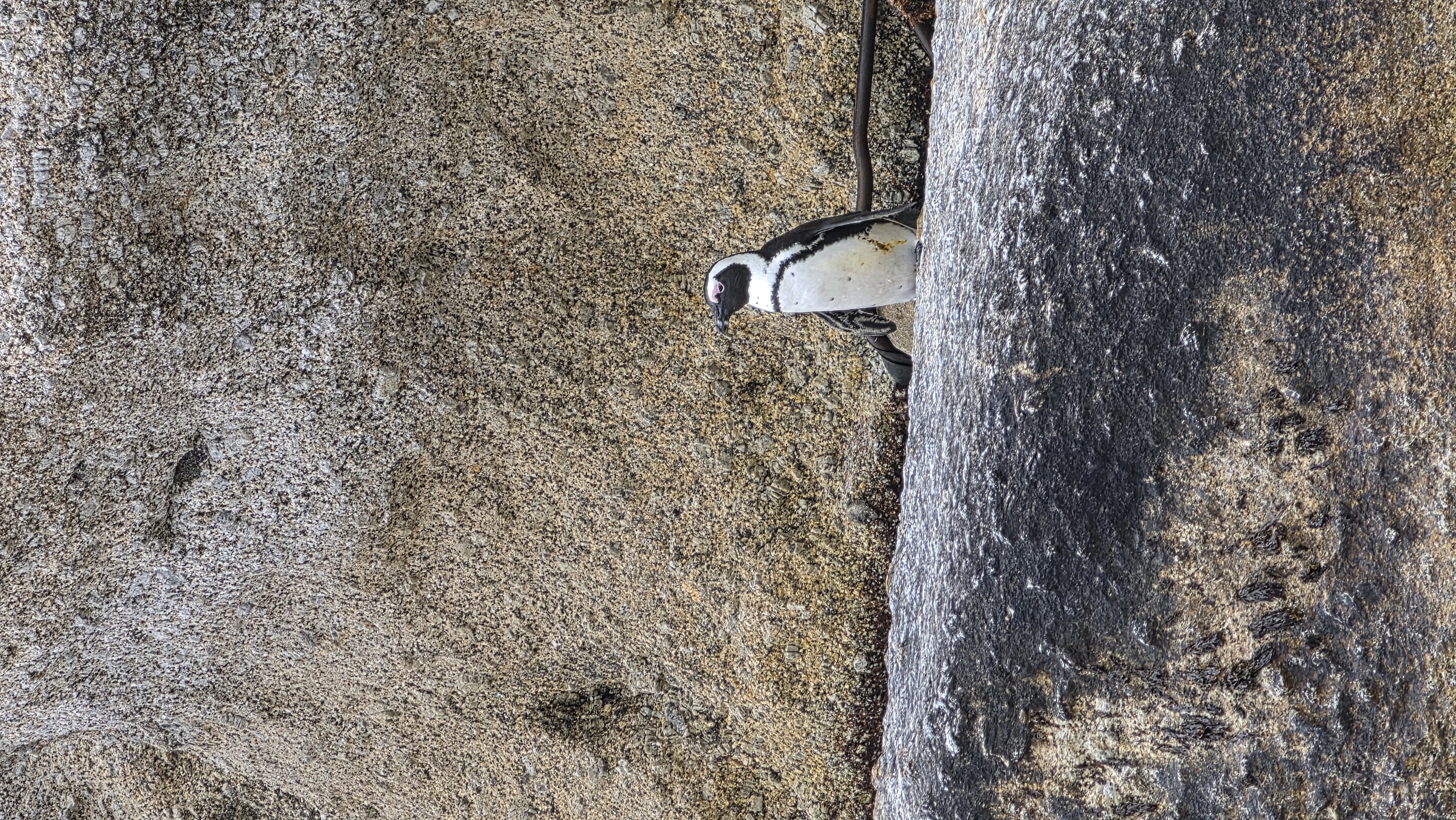
The African penguin (Spheniscus demersus) is the only penguin species found naturally in Africa. With their distinctive black-and-white plumage, white face patch, and charming waddle, they're instantly recognisable — and utterly captivating to watch. But beneath their cute exterior lies a remarkable survival story.
These penguins are built for the ocean. They're expert swimmers, diving up to 100 metres deep in search of fish and squid. On land, they're clumsy and slow — which is why colonies like Boulders Beach exist: safe places to nest, raise chicks, and rest between feeding trips.
Boulders Beach: Home to South Africa's only penguin colony
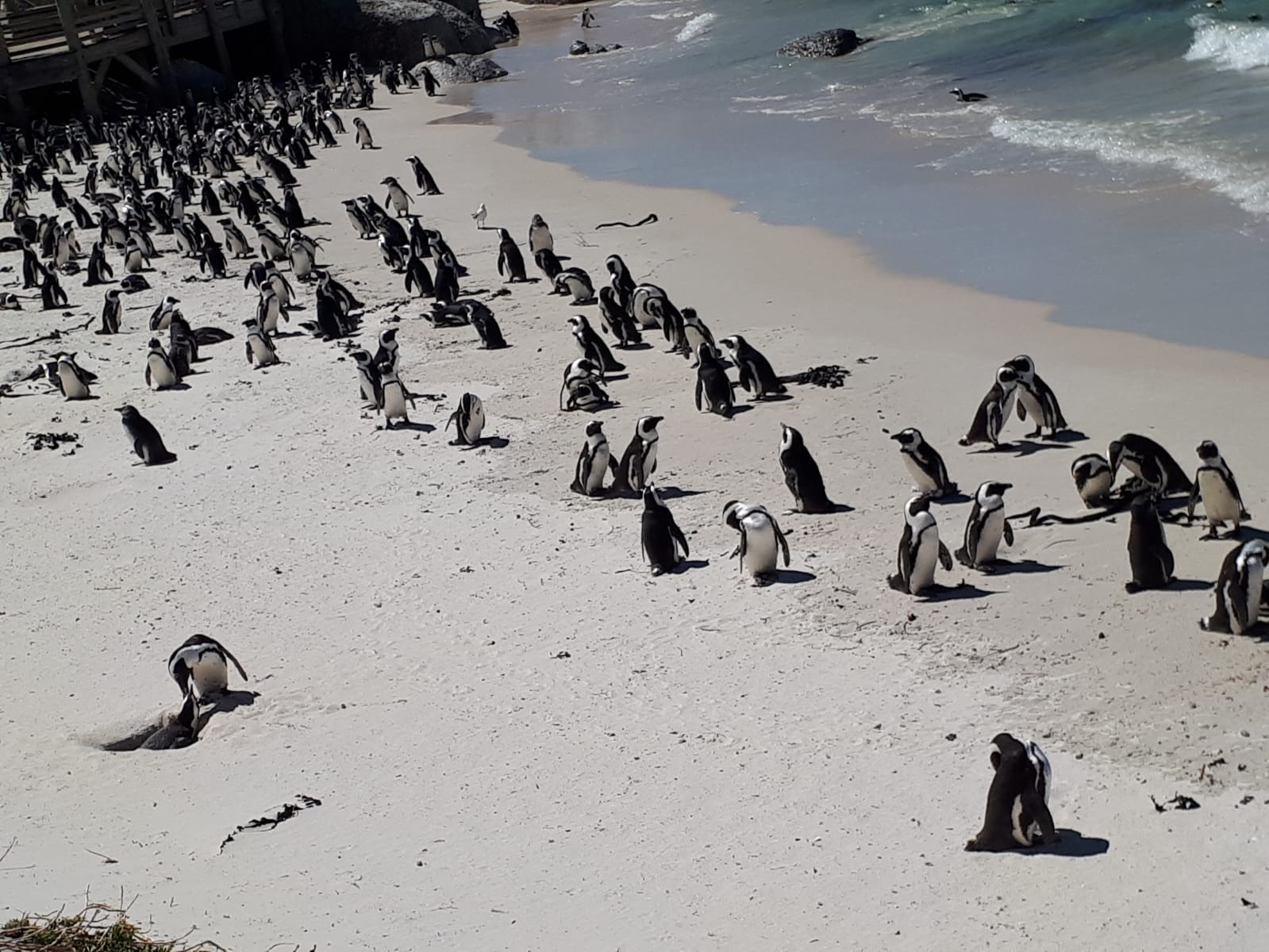
Boulders Beach, near Simon's Town, is home to South Africa's only African penguin colony accessible to tourists — and it's thriving. In the 1980s, fewer than 2,000 African penguins existed on the entire South African coast. Today, Boulders Beach alone hosts around 3,000 birds.
The colony is nestled among massive granite boulders that give the beach its name. These rocks provide shelter, shade, and natural nesting sites. In spring (November–February), you'll see chicks in their downy grey plumage, huddled beside their parents. By winter, they've moulted into their adult black-and-white coats and learned to dive.
What to expect when you visit
Walking through Boulders Beach is surreal. You'll encounter penguins at close range — some nesting under the boardwalk, others preening on rocks, a few diving into the shallows. The colony is active year-round, but each season offers something different:
- Spring (Nov–Feb) — Peak season. Chicks are visible, parents are busy feeding them, and the colony is bustling with energy.
- Summer (Dec–Feb) — Warm, busy, and crowded with tourists. Good for photography, less peaceful.
- Autumn (Mar–May) — Chicks have fledged, birds are preparing to moult. Calmer than summer.
- Winter (Jun–Aug) — Cool, quiet, and intimate. Fewer tourists, better for observing behaviour. Bring a jacket.
Visiting responsibly
The boardwalk at Boulders Beach keeps you separated from the penguins, but they're curious animals — especially during breeding season. A few golden rules:
- Keep your distance. Never corner a penguin or block its path to the water. They can bite, and they panic easily.
- Stay on the boardwalk. This protects the nesting birds and prevents disturbance.
- No flash photography. The sudden light startles them and can disorient chicks.
- Keep noise to a minimum. Loud groups stress the colony.
- Don't feed them. Human food harms penguins and creates dependence.
Photography tips
Boulders Beach is a photographer's dream, but the penguins move fast. Here's what works:
- Go early. Dawn light is stunning, and the colony is calmer before crowds arrive.
- Bring a telephoto lens or zoom. 200mm or longer lets you capture intimate behaviour without approaching.
- Shoot in aperture priority. The granite rocks and water create tricky lighting — let your camera meter the shadows.
- Watch for the dive. The moment a penguin launches into the water is magical. Be patient and wait for it.
- Capture family moments. Chicks and parents interacting tell the story of the colony.
Getting there from Cape Town
Boulders Beach is about 45 minutes from central Cape Town by car, located near the charming coastal town of Simon's Town. The town itself has excellent restaurants, a working harbor, and the South African Naval Museum if you want to combine activities.
Cheryl at Fusion Shuttle & Tours can pick you up from your hotel and handle the drive, so you can relax and enjoy the route along the Cape Peninsula. It's often paired with a visit to Cape Point or the Boulders Penguin Tour (half-day) — or combined with a full-day Cape Peninsula itinerary.
Why African penguins matter
The recovery of the Boulders Beach colony is a conservation success story. Overfishing, oil spills, and climate change still threaten African penguins across the continent, but protected colonies like this one give the species hope. Every visit contributes to conservation efforts — entry fees go directly to management and protection.
When you see an African penguin for the first time, diving effortlessly into the ocean or waddling across a boulder, you're witnessing one of nature's most remarkable animals. Treat it with respect, and you'll never forget it.