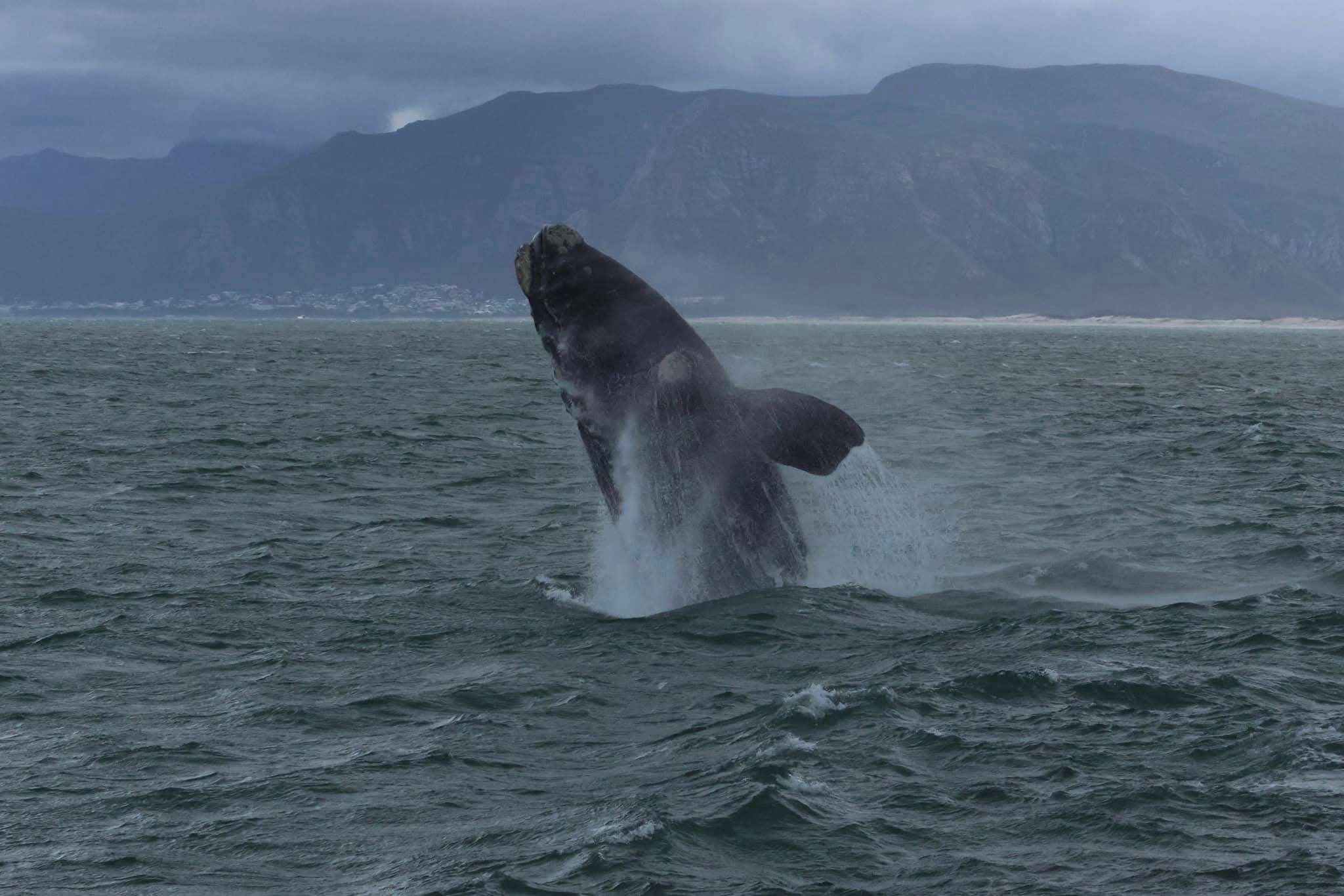
The giants have returned to Walker Bay
Every July, something remarkable happens on the Cape south coast. Southern right whales — fresh from the icy feeding grounds of the Antarctic — begin arriving in the sheltered waters of Walker Bay. They come to mate, to calve, and to raise their young in the calm, protected shallows. By spring, the bay is alive with mothers and calves, breaching, lobtailing and spy-hopping sometimes just metres from the shore.
If you're in Cape Town anytime between July and November 2026, this is the natural spectacle to build a day around. And the beauty of Hermanus is that you don't need a boat — the town's clifftop paths offer what many consider the best land-based whale watching in the world.
Month-by-month: what to expect
- July — The season opens. The first whales arrive, and sightings build through the month. Crisp, clear winter days make for beautiful viewing conditions and the town is wonderfully quiet.
- August — Numbers grow steadily. Mating groups are active, and the first calves of the season appear. A great month to combine whales with the start of the West Coast wildflower season.
- September — Peak season begins. The bay fills with mothers and newborn calves. The Hermanus Whale Festival usually takes place in late September — the town buzzes with energy.
- October — The other peak month. Calves are growing stronger and more playful, which means more surface activity — breaching, tail-slapping, and curious approaches to the shoreline.
- November — The season winds down as families begin the long journey back to Antarctic waters. Late visitors can still enjoy excellent sightings early in the month.
Where to watch from
The Hermanus Cliff Path runs for roughly 12 kilometres along the edge of Walker Bay, and almost any point along it can produce a sighting. A few favourite spots:
- The Old Harbour — the heart of town, where the famous Whale Crier blows his kelp horn to announce sightings.
- Gearing's Point — elevated, panoramic, and often the best all-round viewpoint.
- Sievers Point & Kwaaiwater — quieter stretches where whales often come remarkably close to the rocks.
- Grotto Beach — a Blue Flag beach with long views across the whole bay.
Want to get even closer? Boat-based whale tours and the optional aerial flights operate from Hermanus during the season — Cheryl can arrange a licensed operator as part of your day.
Planning your whale day from Cape Town
Hermanus is about 90 minutes from Cape Town, and the drive itself — over the mountains or along the coastal Clarence Drive route past Betty's Bay — is one of the finest in the Cape. With Cheryl handling the wheel, the day typically looks like this:
- Morning pickup from your Cape Town hotel, with the scenic coastal route timed for morning light.
- Mid-morning on the cliff path — the best sighting hours, walked at your own pace.
- Lunch in the village — Hermanus has superb seafood restaurants overlooking the bay.
- Afternoon flexibility — more whale time, a boat trip, or wine tasting in the nearby Hemel-en-Aarde valley, famous for pinot noir.
Because every Fusion tour is private, the day bends around what you want — photographers can wait for the perfect breach, families can take it slow, and wine lovers can linger in the valley.
Tips for first-time whale watchers
- Bring binoculars — whales are often visible to the naked eye, but binoculars transform the experience.
- Dress in layers — winter and spring days swing from crisp to warm; the cliff path is exposed.
- Be patient — give it time. Twenty minutes of watching usually rewards you far more than a quick glance.
- Listen for the kelp horn — the Whale Crier's blasts tell you where the whales are being seen right now.
- Book ahead for September–October — peak season weekends fill up quickly, especially around the Whale Festival.