Baboons by the sea
The southern end of the Cape Peninsula is home to troops of chacma baboons — the large, dark-furred baboon of southern Africa — and they are one of the few populations in the world that live right beside the ocean, foraging along the shoreline and the fynbos slopes around Cape Point and the Cape of Good Hope. Rounding a bend on the Peninsula drive to find a troop crossing the road, babies clinging to their mothers, is a moment most visitors never forget.
They're intelligent, socially complex, and completely wild. Watching them go about their day — grooming, foraging, the youngsters tumbling about — is a real privilege. But it comes with rules that matter enormously.
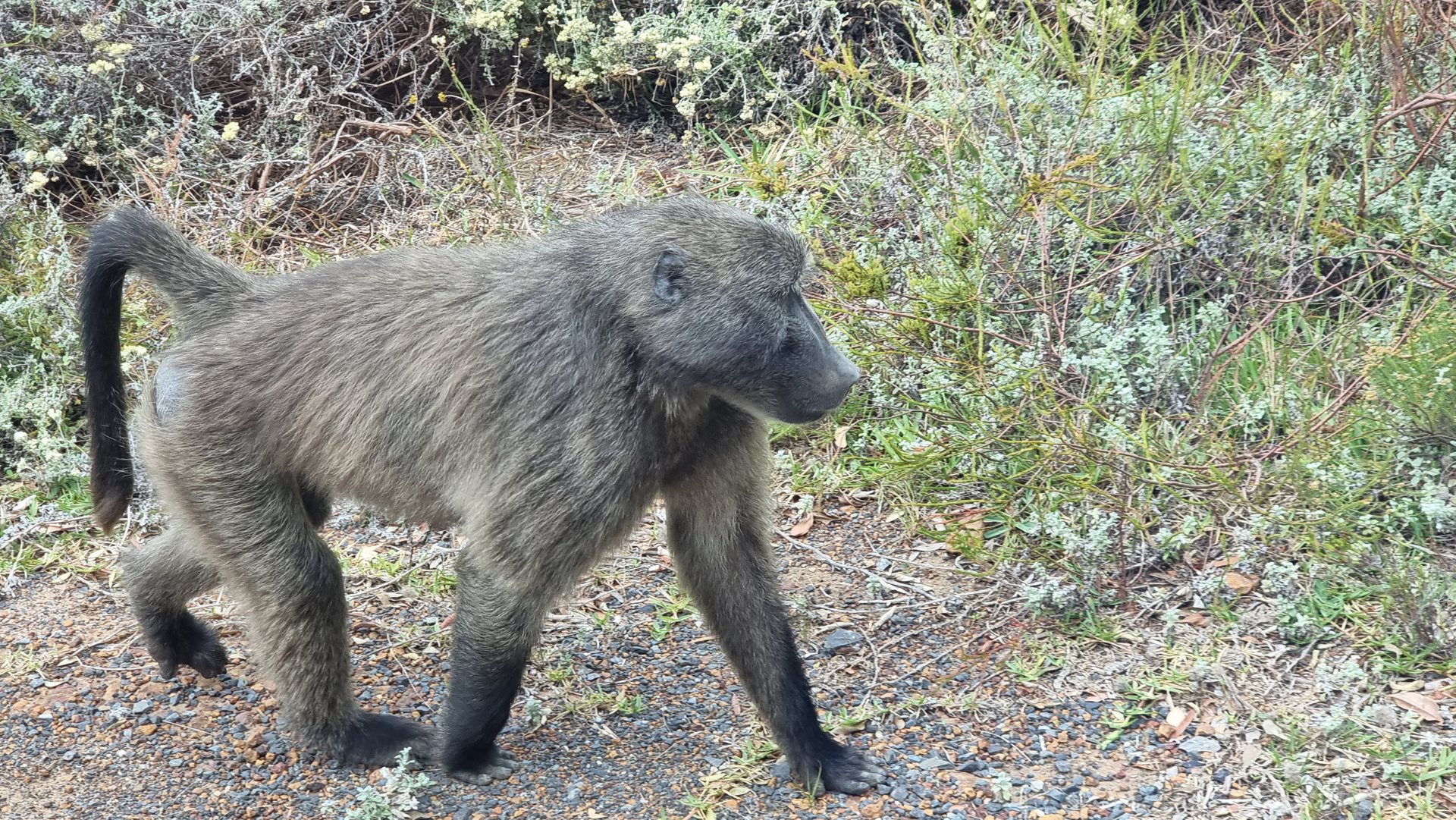
A chacma baboon in the fynbos — wild, and best kept that way.
The most important rule: never feed them
You'll see the signs all over the Peninsula, and they are not decoration: baboons are dangerous wild animals — do not feed them, keep your doors locked and your windows closed.
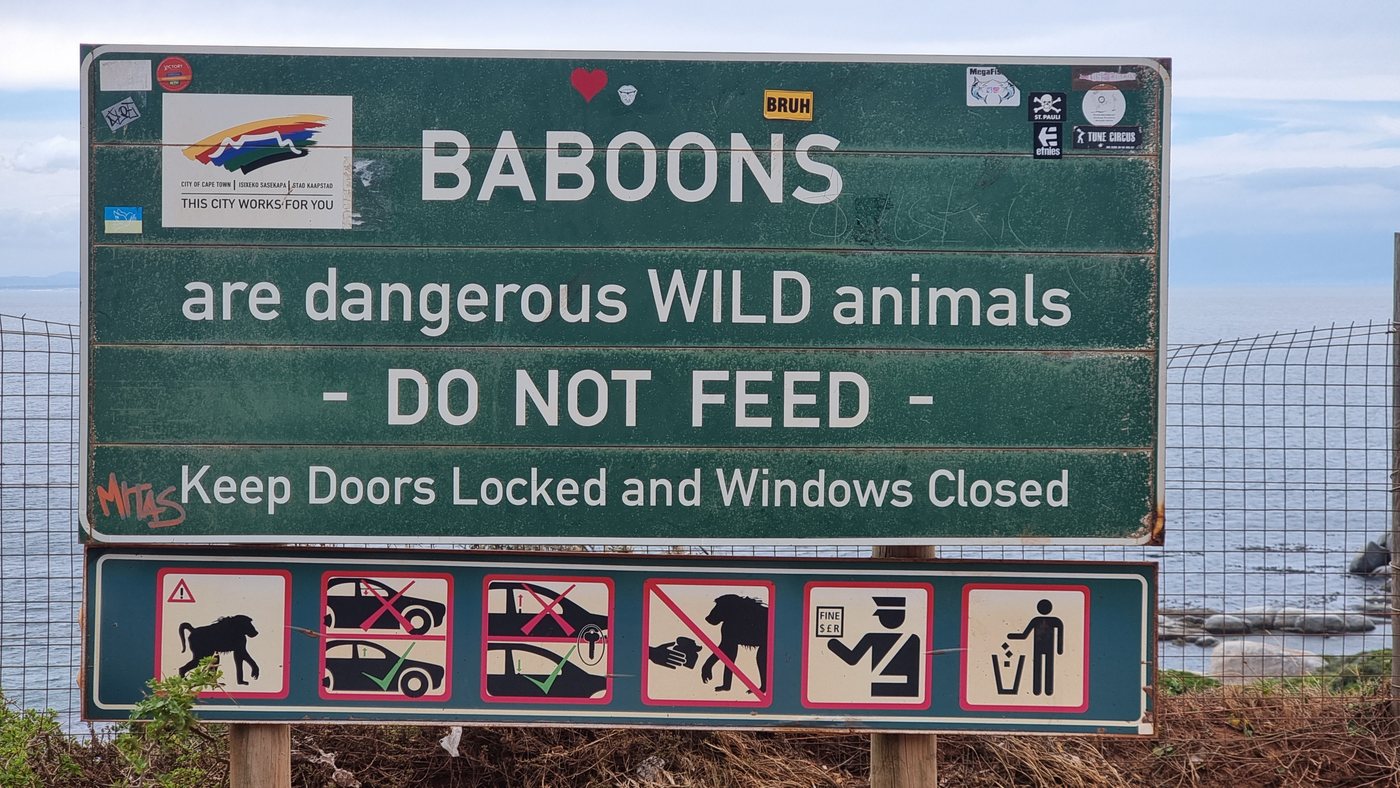
You'll see this sign across the Peninsula — and it means every word.
Here's why it matters so much. A baboon that learns to associate people and cars with food becomes bold, then a nuisance, then a danger — raiding cars and bins, and occasionally hurting people. And a baboon that becomes a persistent problem often ends up being put down. There's a hard truth conservationists repeat here: a fed baboon is a dead baboon. Feeding them, even once, even kindly, is one of the most harmful things a visitor can do. It's also illegal.
So the kindest thing you can do is keep your distance, keep your food out of sight, keep car windows up when a troop is near, and simply let them be wild.
How to enjoy them safely
- Stay in or near the vehicle when a troop is close, with windows up. Never get between a baboon and its escape route, or between a mother and her baby.
- Don't hold food or drinks visibly — not even a packet of chips. They have superb eyesight and quick hands.
- Never try to touch, corner, or pose with them. They're strong, fast and unpredictable.
- Photograph from a respectful distance. A zoom lens or phone from the car gets you the shot without stressing the animals.
- Follow the baboon monitors. In some areas rangers help keep troops out of trouble — heed their guidance.
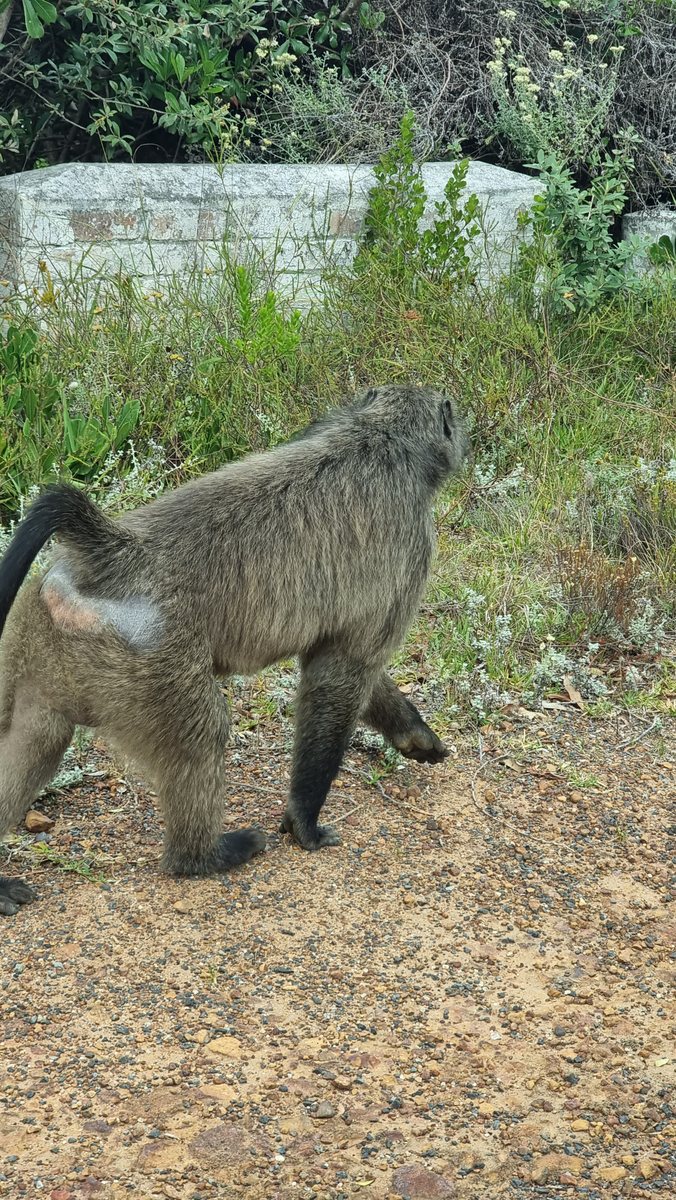
Give them room and let them pass — this is their home.
Part of a wilder Cape Point day
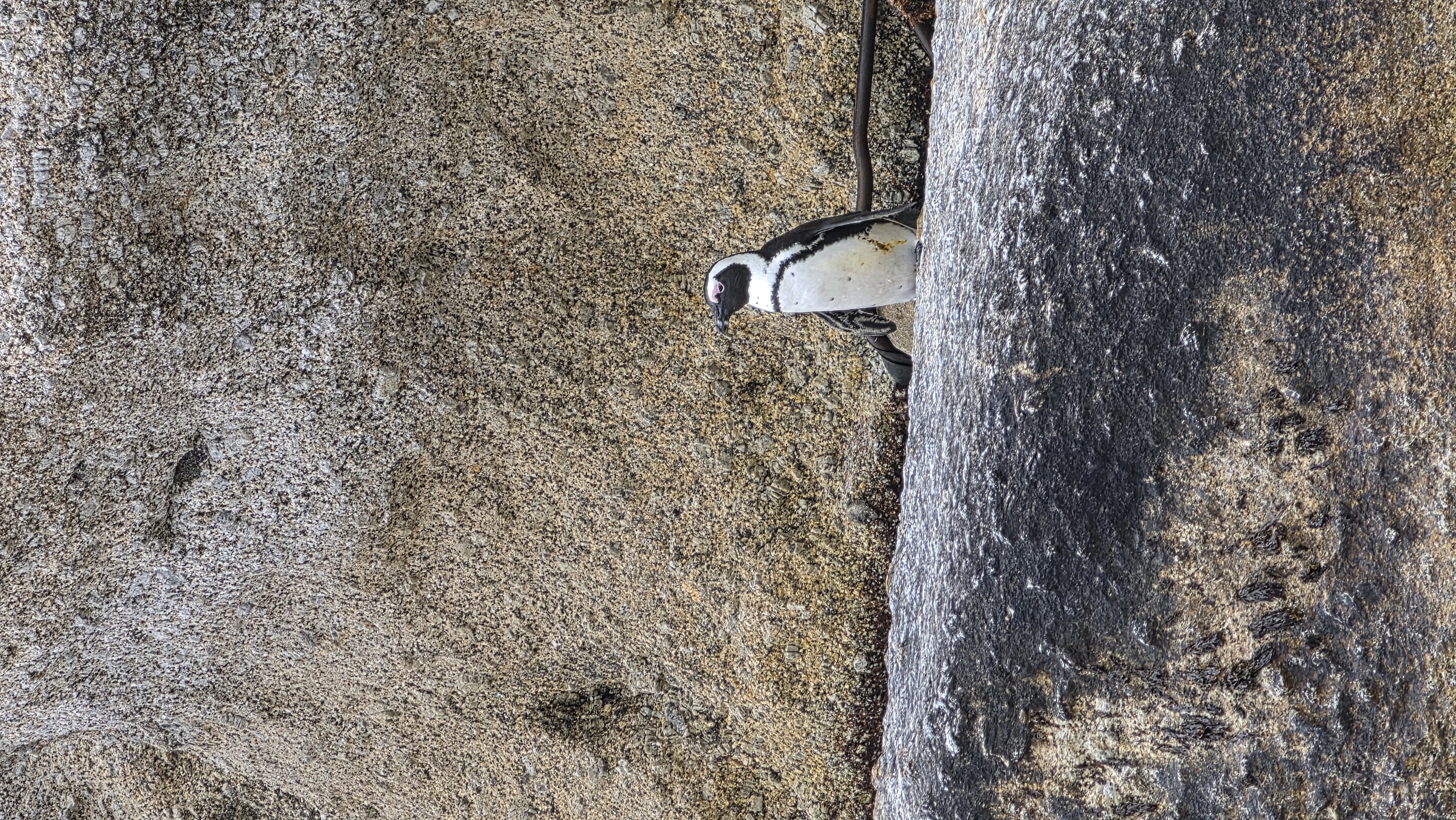
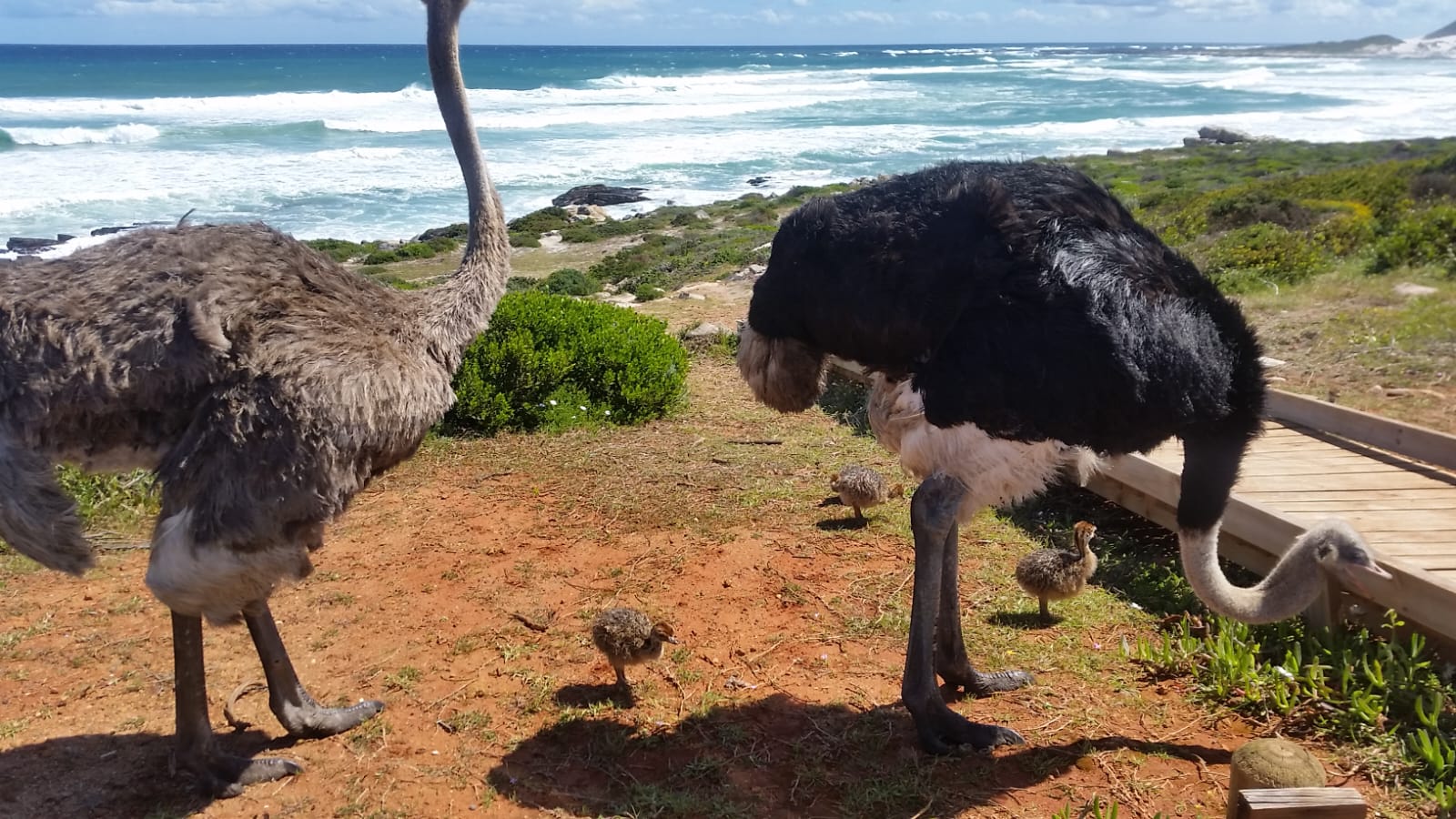
The baboons are one of the reasons the Cape Point & Peninsula day feels like a proper wildlife outing and not just a scenic drive. Between the penguins at Boulders, the ostriches and elands of the Cape of Good Hope reserve, the whales offshore in season and the baboons along the road, the Peninsula packs an astonishing amount of wildlife into a single day.
Touring privately makes it safer and better: Cheryl knows where the troops tend to be, how to behave around them, and how to position the car so you get a wonderful, respectful sighting — a real encounter with wild Africa, right on Cape Town's doorstep.