The wine that annoyed the French
Start with the joke everyone knows. Fairview, just outside Paarl, makes a red blend called "Goats do Roam" — say it out loud and you'll hear Côtes du Rhône. The French, reportedly, were not amused. The name stuck anyway, and it spawned a whole family of puns that have been winding up wine purists ever since.
But the goats aren't just wordplay. Fairview keeps a herd, uses their milk for its well-known cheeses — and built them a tower with a spiral staircase up the outside. The goats, being goats, climb it. Visitors stand at the bottom with their cameras waiting for a goat to appear at the top, and the goats oblige.
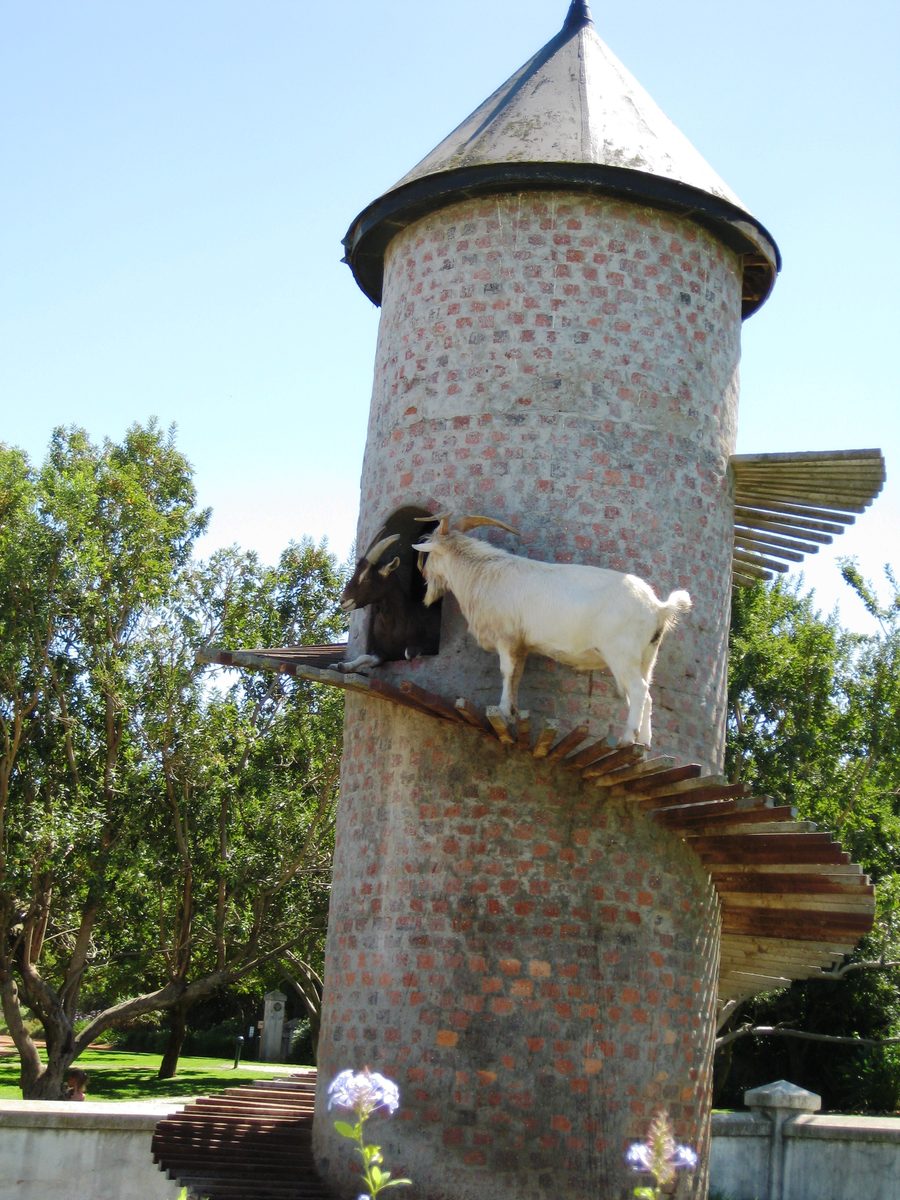
The Fairview goat tower — the goats really do climb it, and they really do roam.
It's a brilliant first stop, because it sets the tone: the Cape Winelands takes its wine seriously and itself far less so.
Muratie: dust, cobwebs and centuries
Then drive to Muratie, near Stellenbosch, and the mood changes completely. This is one of the oldest wine farms in the Cape — and the estate where South Africa's first Pinot Noir was made, back in the 1920s. The cellar looks its age, because they've deliberately left it alone: no polished chrome, no visitor-centre gloss. Just old barrels, old walls, dust, cobwebs and the smell of centuries of wine. (We gave Muratie its own full story here.)
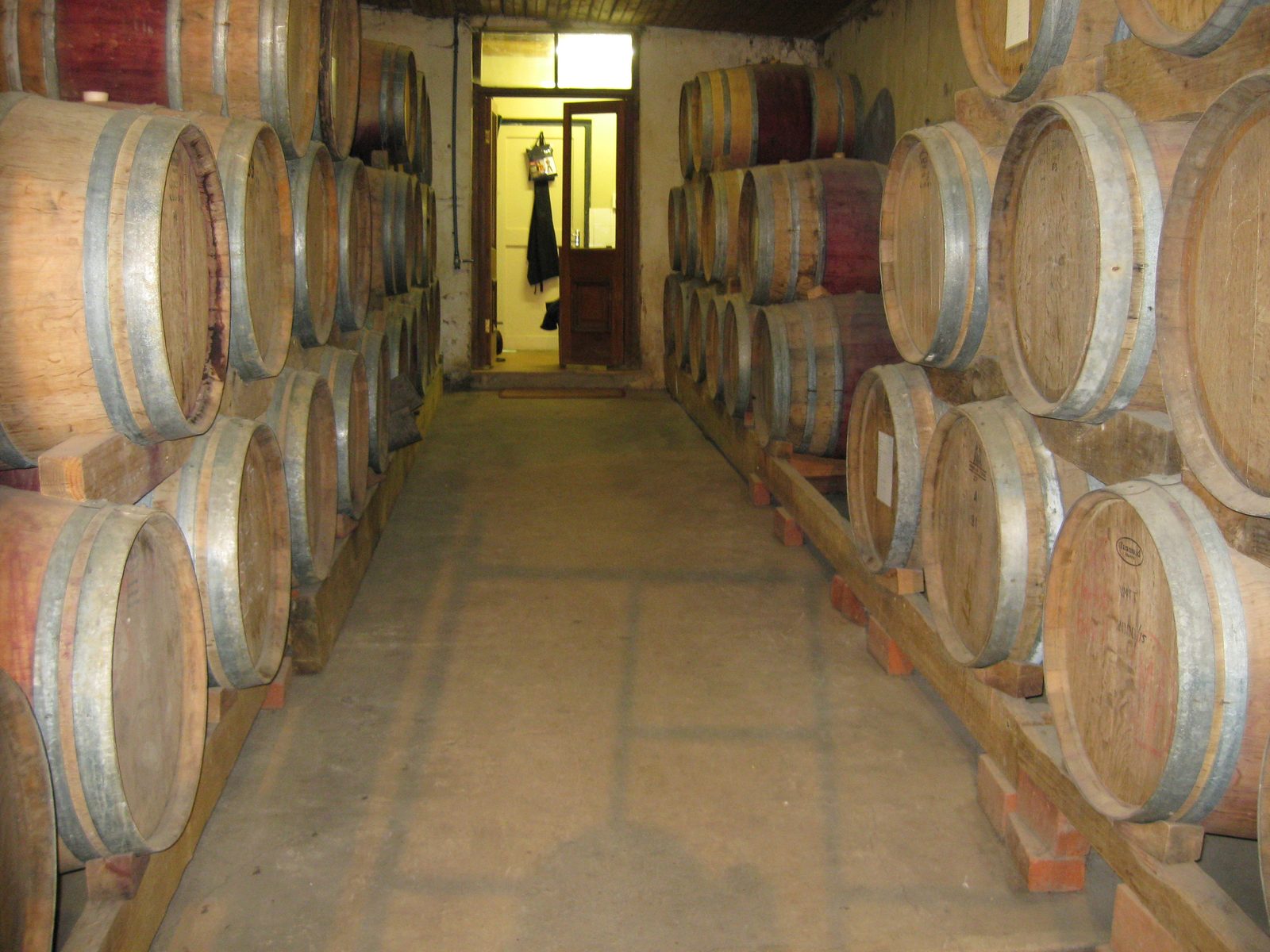
Muratie's barrel cellar — history you can smell.
The rest of the farm has the same unhurried, lived-in quality. Vintage machinery sits where it was parked, oak trees shade the cobbles, and nothing looks staged for Instagram — which, ironically, makes it one of the most photogenic places in the Winelands.
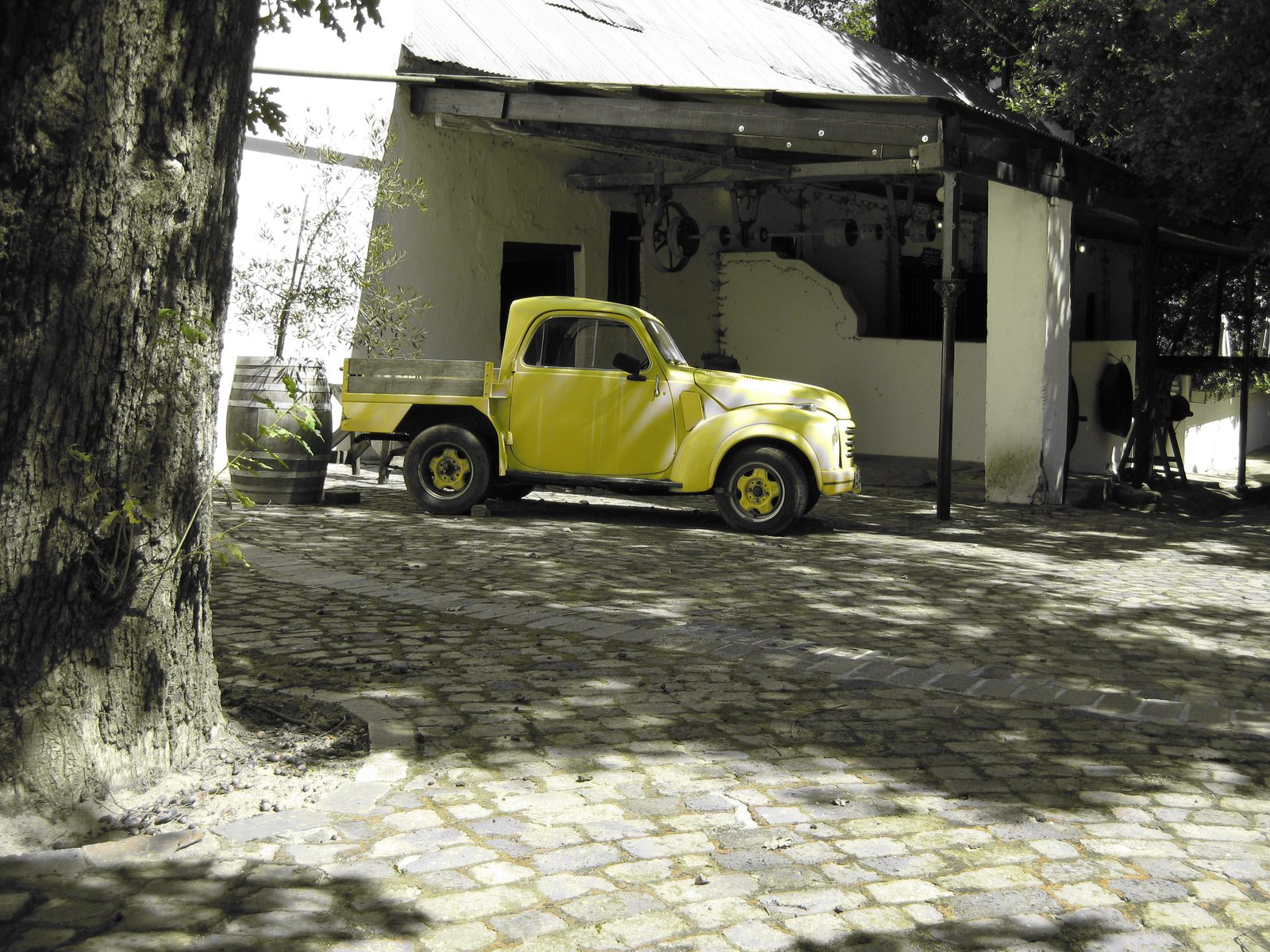
Muratie: a farm that has never felt the need to modernise its charm away.
Delheim: the neighbour with a different accent
Carry on along the same Simonsberg slopes and you reach Delheim — Muratie's neighbour, and proof that two farms can share a mountain and still feel nothing alike. Where Muratie leaves its history dusty, Delheim polishes it: this beautifully restored Caterpillar D2 sits under its own shelter like a museum piece, surrounded by aloes.
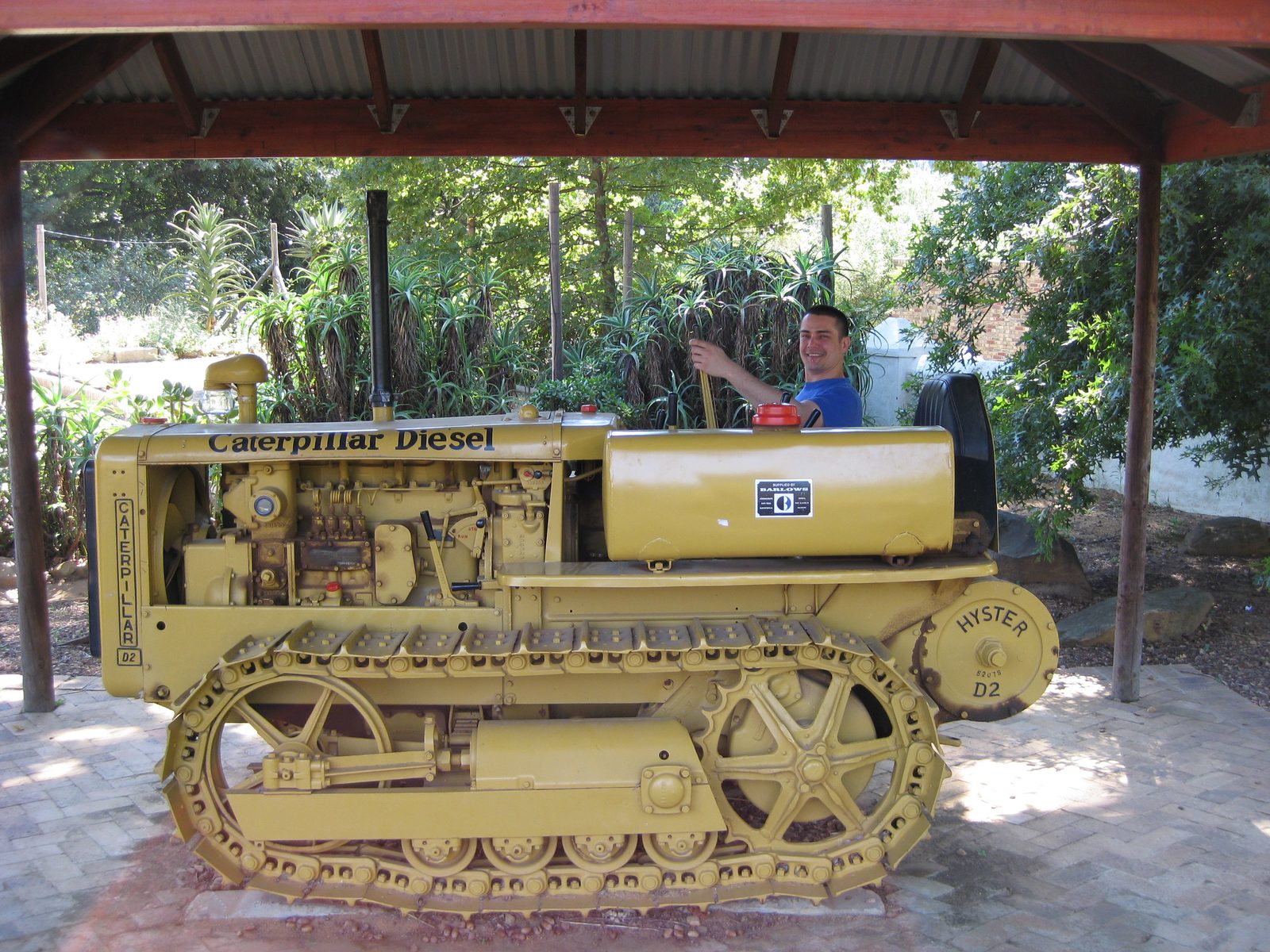
A beautifully restored Caterpillar D2 at Delheim — the same farm history as next door, polished up rather than left to rust.
That's the fun of the Simonsberg: you can walk out of a 300-year-old cellar, drive ten minutes, and be somewhere with a completely different idea of what a wine farm should feel like.
Dieu Donné: hands in the harvest
And then Dieu Donné, up on the slopes above Franschhoek. Time your visit for harvest — roughly February to April — and the whole valley shifts gear: tractors on the roads, crates of fruit coming in, cellars working around the clock, and the smell of crushed grapes everywhere.
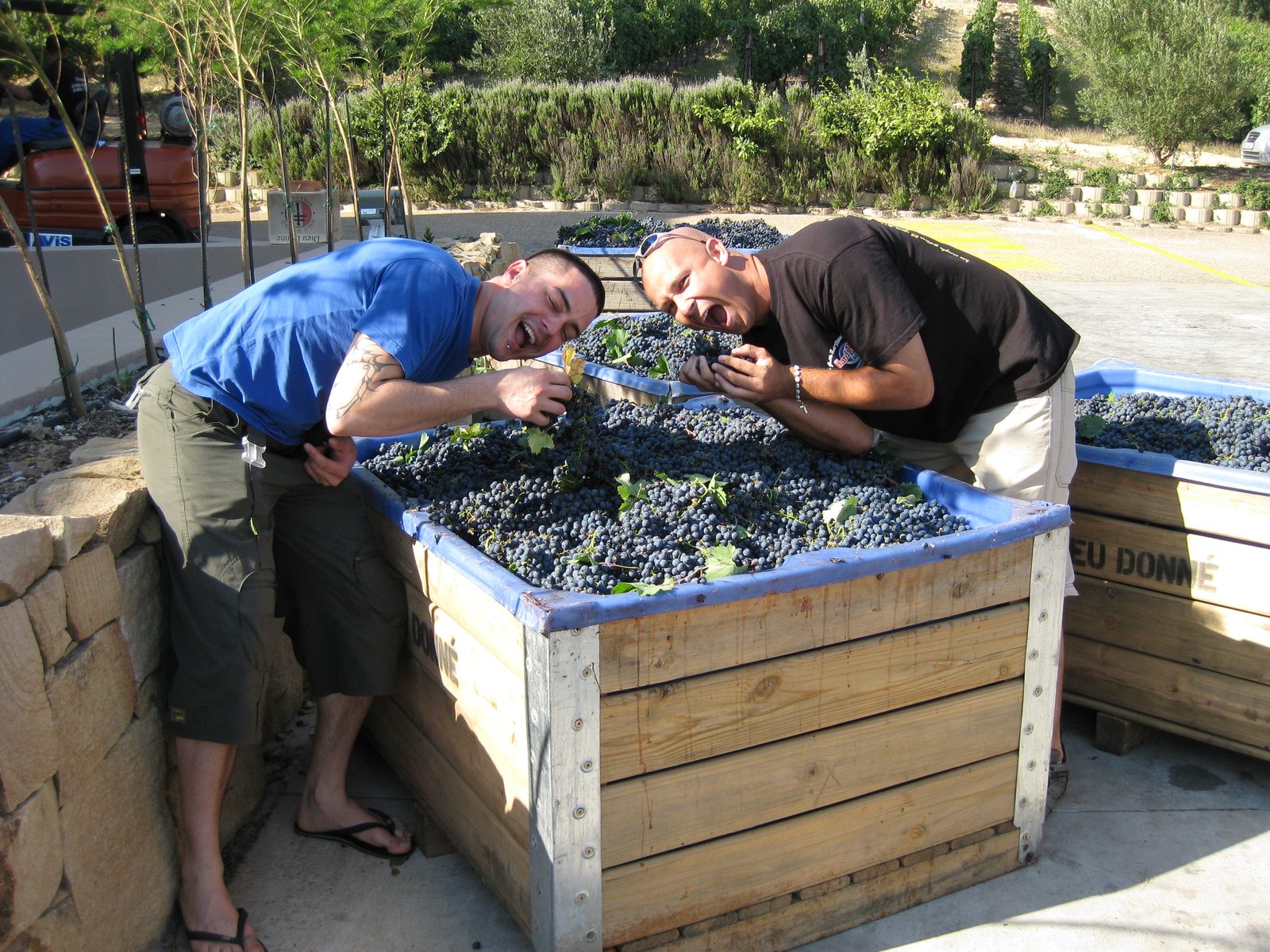
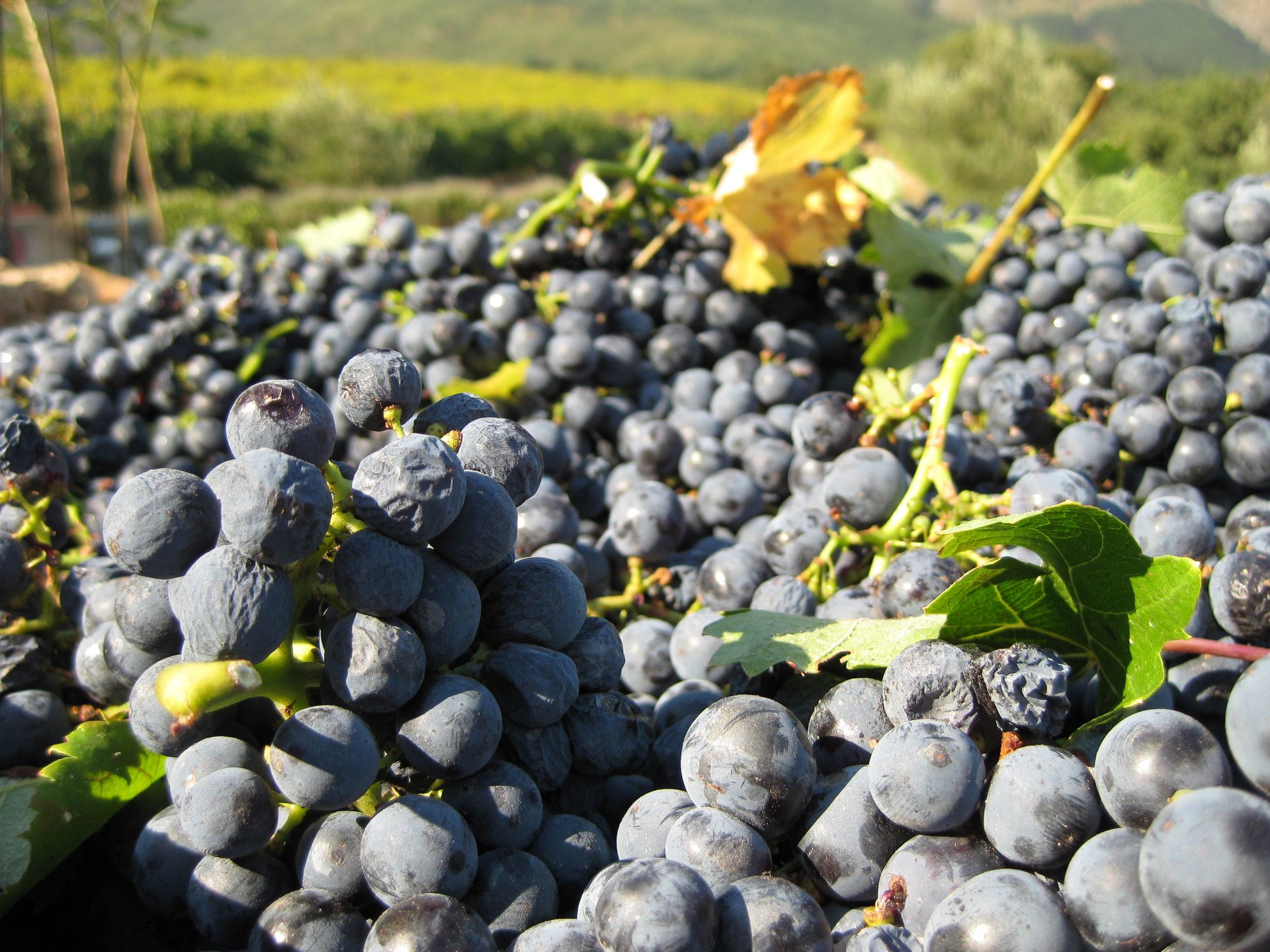
Harvest at Dieu Donné — grapes straight off the vine, still warm from the sun.
Getting your hands into a crate of just-picked grapes reframes the whole thing. That bottle you'll open in London in December started here, as fruit in a wooden box on a hot Franschhoek afternoon.
Why the variety is the point
Here's what visitors miss when they book a generic "wine tour": the Cape Winelands isn't one place. Fairview is cheeky and family-friendly. Muratie is ancient and atmospheric. Delheim, its neighbour on the same mountain, is polished and orderly. Dieu Donné is Franschhoek's working, hands-on side. Four estates, four completely different afternoons — and that's before you count the hundreds of others.
A tasting-room-conveyor-belt tour gives you four versions of the same experience. A day built around what you like — big reds, bubbles, history, views, cheese, or a long lunch — gives you the Winelands as locals know it.
How to do it properly
Two practical truths about the Winelands. First, the estates are spread across Paarl, Stellenbosch and Franschhoek, and the best of them are down farm roads and over mountain passes — so navigation matters. Second, and more importantly: tastings are generous, the roads are winding, and South Africa drives on the left. Somebody has to not drink.
That's the whole case for going privately. Cheryl has been driving these valleys since 2003 — she knows which farms suit which people, which lunch is worth booking ahead, and how to sequence the day so it flows. You get the window seat, the tastings, and the goat tower photo. She gets the wheel.
If you'd like more on choosing between the two main wine towns, read our guide to Stellenbosch vs Franschhoek.