A farm that wears its age proudly
Most wine estates chase the new: gleaming tasting rooms, glass-walled cellars, architecture designed for the camera. Muratie does the opposite. Step inside and you find flaking plaster, dark old beams, dusty bottles on the windowsills and cobwebs left exactly where the spiders spun them. Nothing here is staged — and that, paradoxically, is what makes it one of the most atmospheric places in the entire Cape Winelands.
It's a farm that trusts its own history to do the talking. And it has a great deal of history to draw on.
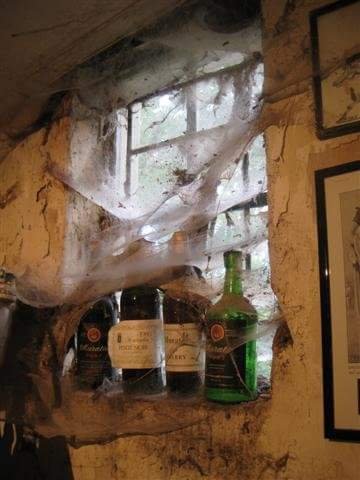
Cobwebs and old bottles, left exactly as they are — Muratie's cellar is unrestored on purpose.
Over 300 years of names on the wall
There's a curved stone wall on the estate that quietly tells the whole story. Under the single word "Muratie 1699 – 2011", it lists the families who have farmed this land across the centuries — a roll-call that reads like a history of the Cape itself: the early Campher and Du Preez families, the Melcks, the Beyers, the Canitz family who took over in the early 20th century — and then, in 1987, a Melck once more, bringing the farm full circle back to a family that had owned it two hundred years before.
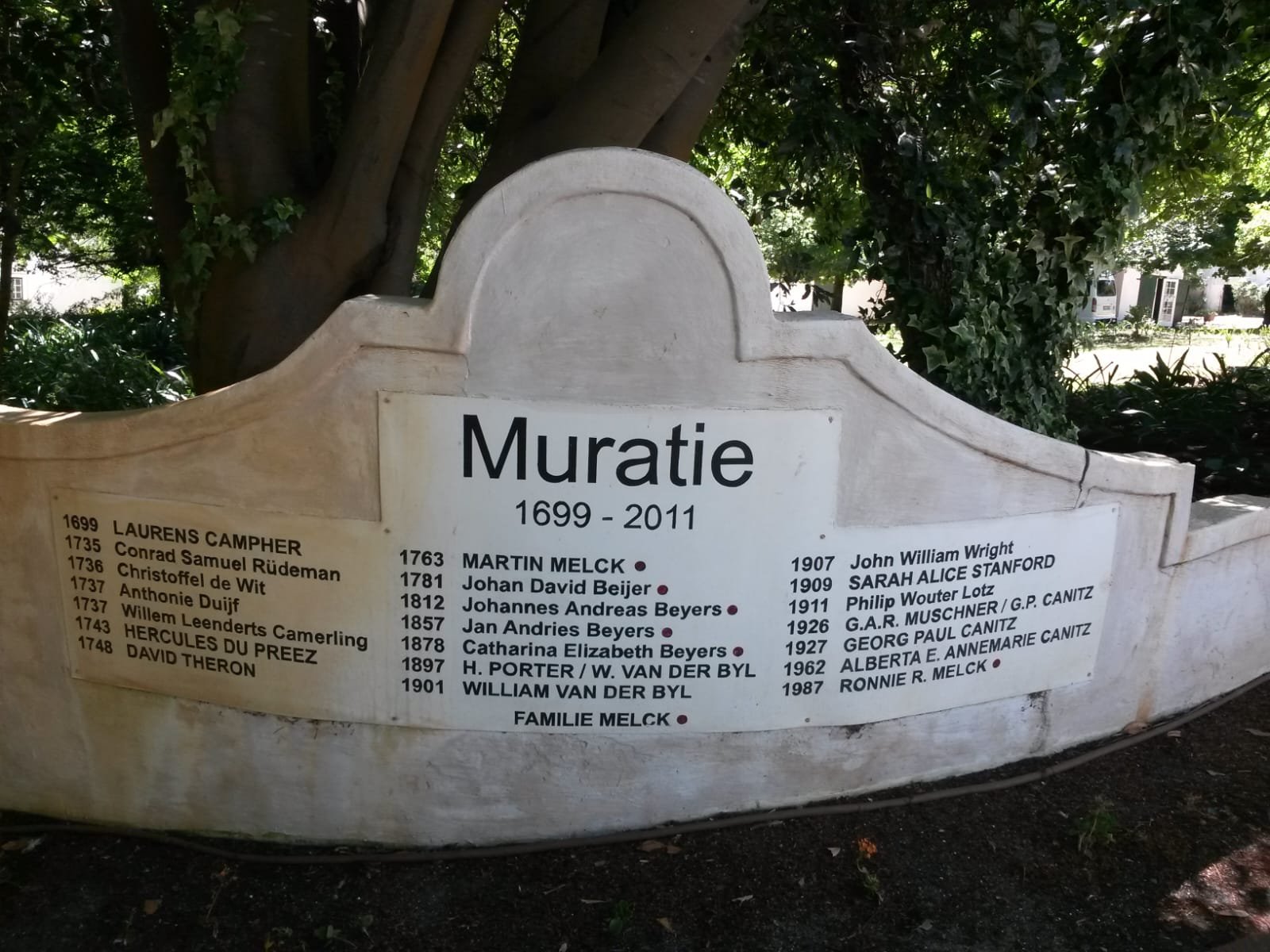
Three centuries of ownership, carved into one wall — from the 1600s to a Melck homecoming in 1987.
Standing in front of that wall, you realise a tasting at Muratie isn't just about the wine in the glass. You're drinking something with a genuine, unbroken thread back to the earliest days of the Cape.
The birthplace of South African Pinot Noir
Muratie has one more claim that wine lovers travel for: it is where South Africa's first Pinot Noir was made. In the 1920s the Canitz family — who owned the farm at the time — planted the country's very first Pinot Noir vines here on the Simonsberg, and Muratie released South Africa's first bottling of the variety. A century on, Pinot Noir remains part of the estate's identity, and that heritage is a large part of why Muratie holds such a special place in Cape wine history.
So the glass in your hand isn't just old — for one variety, it's where the whole South African story began.
A garden full of art
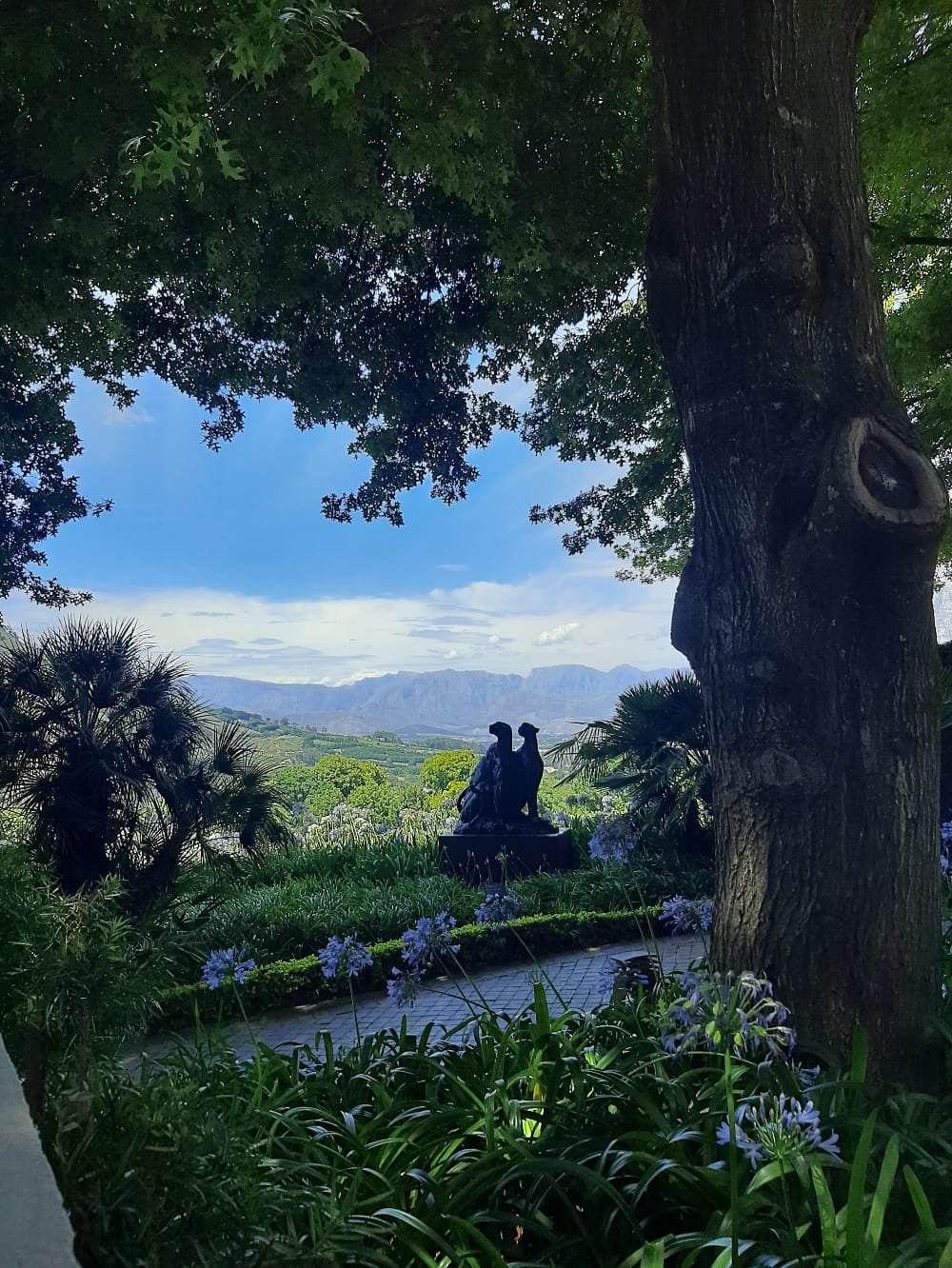
For all its old-world gravity, Muratie has a playful, creative side too. The gardens are dotted with sculpture — a striking blue beaded head rising out of the cycads, bronze figures among the agapanthus — set against oak canopies and long views to the mountains. It's the kind of place where you wander with a glass in hand and keep turning a corner into something unexpected.
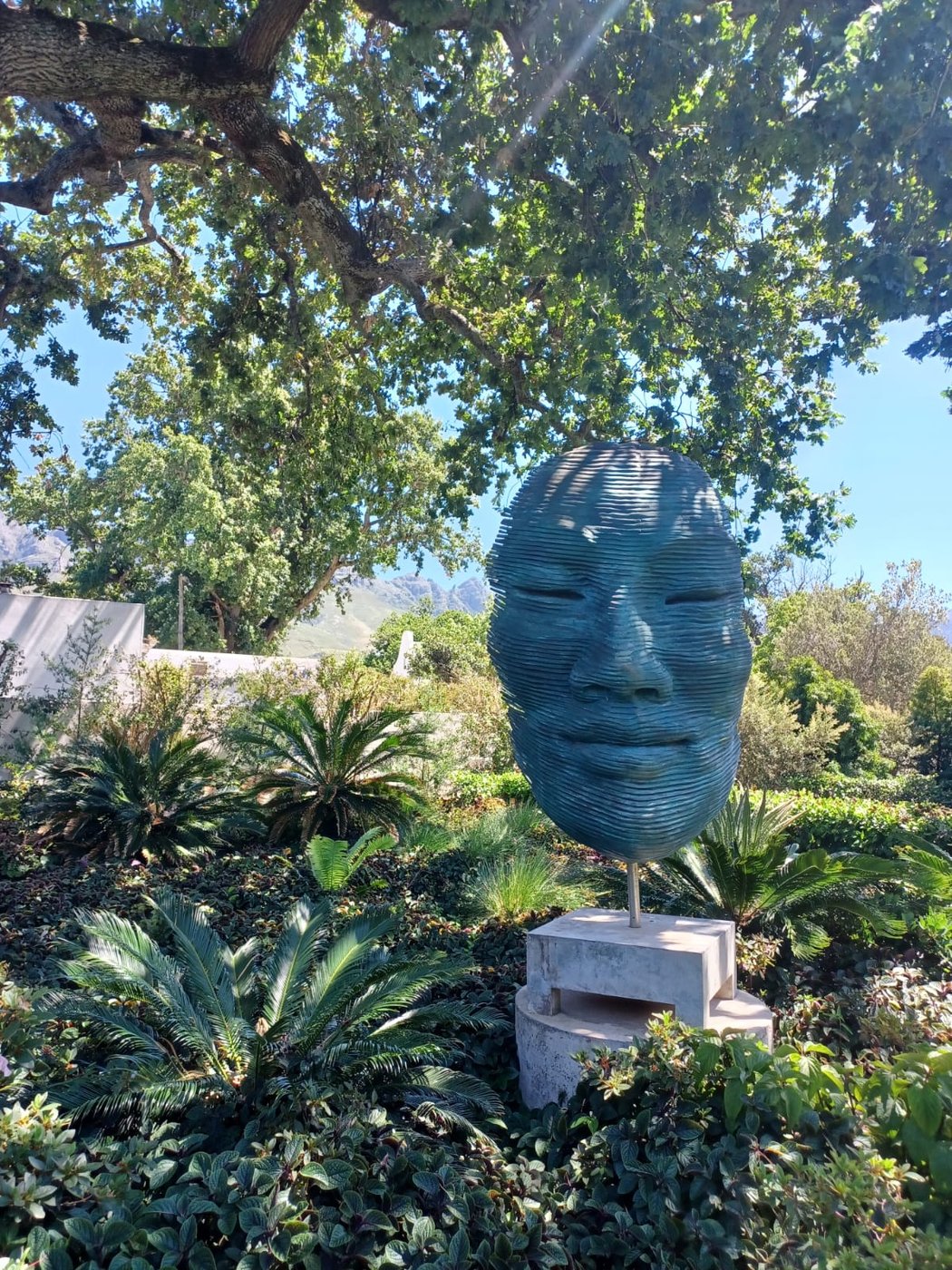
Art among the cycads — Muratie's gardens reward a slow wander.
That blend is the whole appeal: ancient and creative, serious about wine but never stuffy, grand but wonderfully unpolished.
Where it sits — and who to pair it with
Muratie is on the Simonsberg, the mountain that rises between Stellenbosch and Paarl, in a cluster of historic farms. Its immediate neighbour is Delheim — and the two make a perfect study in contrasts, which is exactly why we paired them in our post on four Winelands estates with four personalities. Where Muratie leaves its history dusty, Delheim polishes it. Ten minutes apart, worlds apart in feel.
Visiting Muratie with Cheryl
Muratie is the kind of estate that rewards knowing where you're going — it's down the Simonsberg farm roads, not on the main tourist conveyor belt, and it's best enjoyed unhurried, with time to linger in the cellar and wander the garden. On a private Winelands day, Cheryl can pair it with its Simonsberg neighbours or with the bigger names around Stellenbosch, shaped around whether you're there for the history, the art, the wine — or all three.
And, as ever with a wine day: somebody has to drive, the roads wind, and the tastings are generous. Let that somebody be Cheryl.