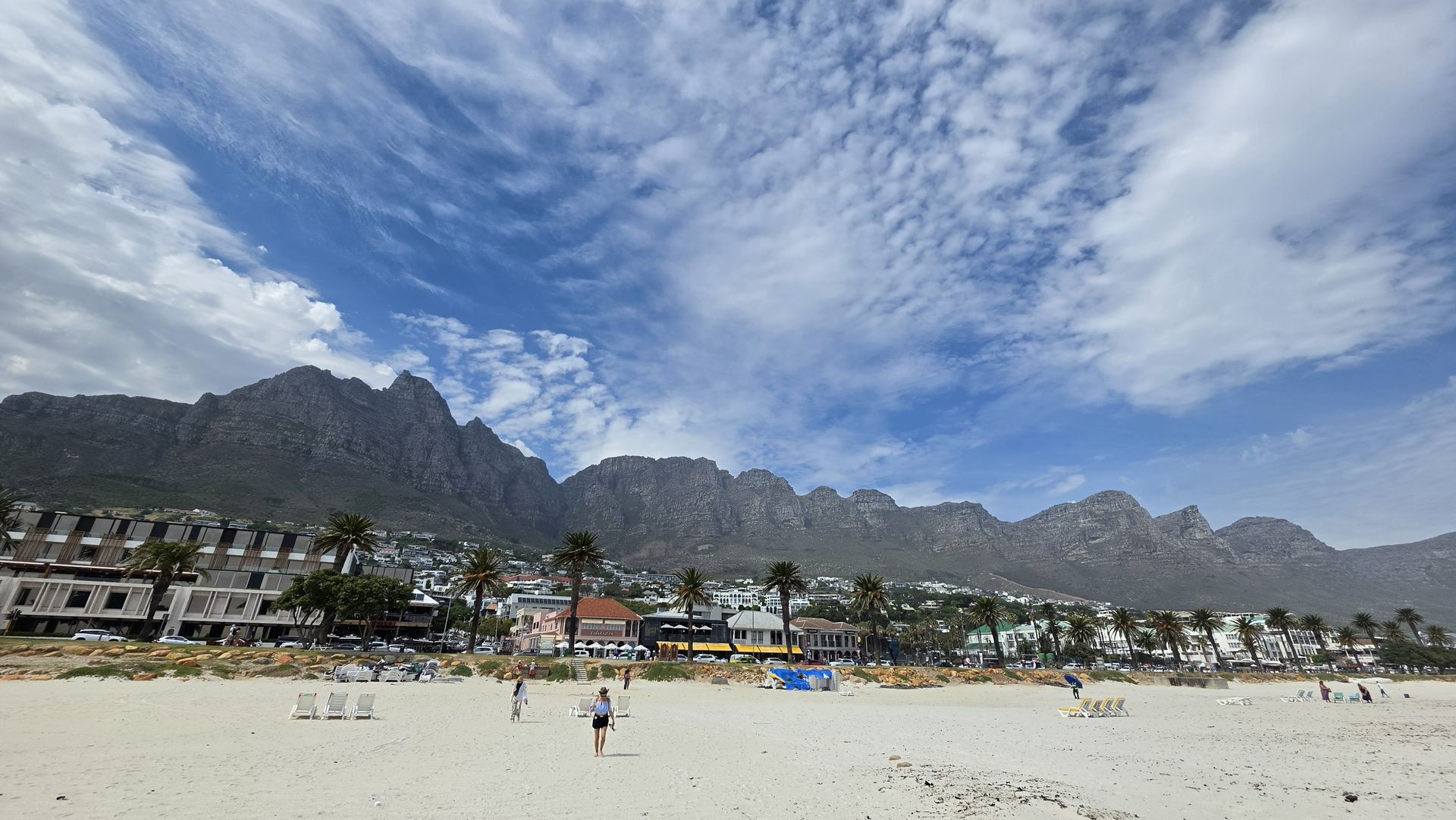
The mountain that owns the city
Every great city has a landmark. Cape Town has a mountain — a vast, flat-topped massif of ancient sandstone rising over a thousand metres straight out of the city bowl. In 2012 it was named one of the New Seven Wonders of Nature, and geologists will tell you its rocks are among the oldest on any mountain on Earth — older than the Alps, the Andes and the Himalayas.
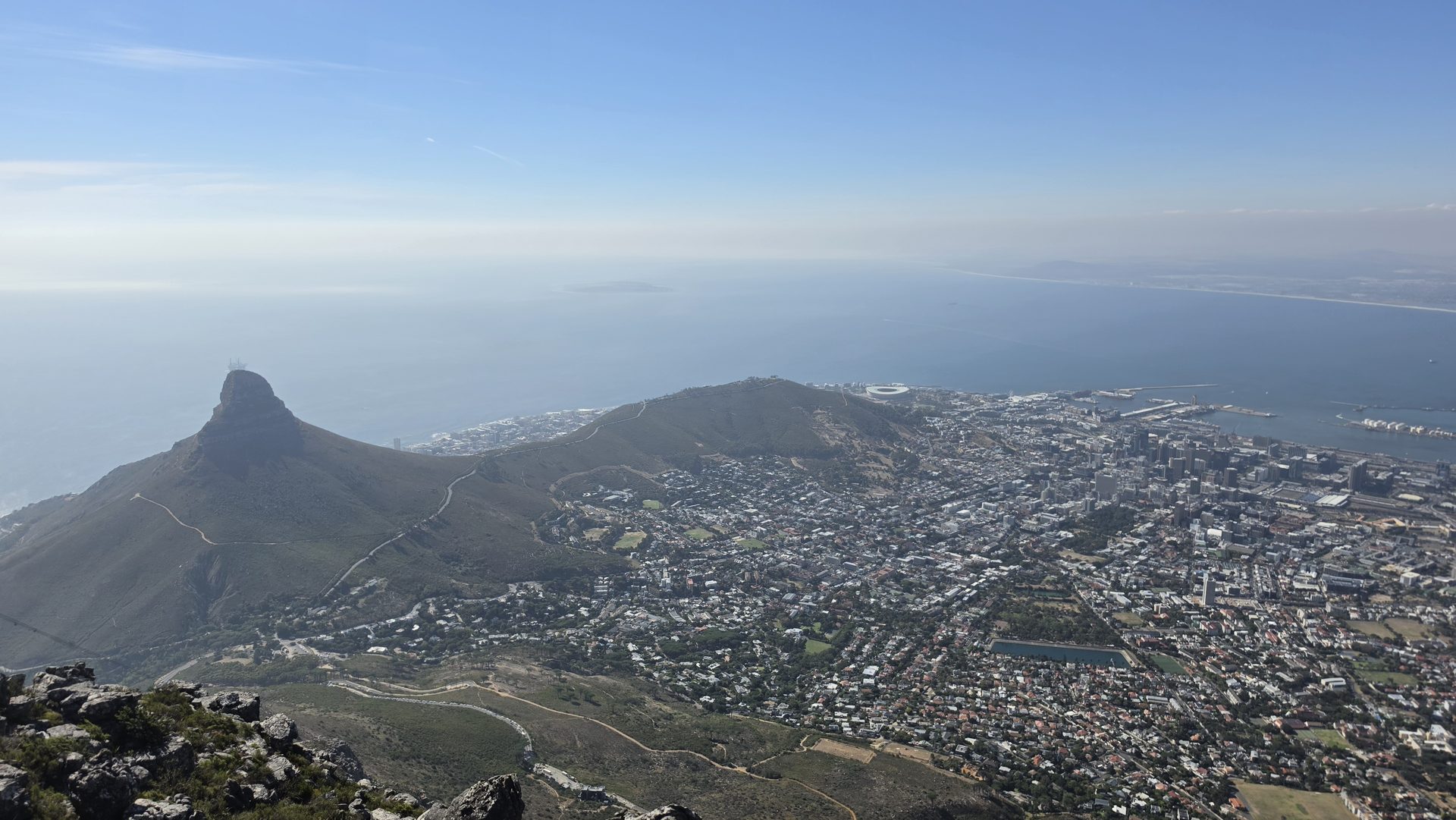
From the summit plateau, the view is simply the best in Cape Town: Lion's Head and Signal Hill below you, the city curving around the harbour, Robben Island floating in Table Bay, and the Atlantic stretching to the horizon. That's the photo at the top of this page — taken from the summit on a flawless winter afternoon.
Up in five minutes: the cableway
Since 1929, the Table Mountain Aerial Cableway has carried visitors from the lower station on Tafelberg Road to the summit in about five minutes. Today's cars are Swiss-engineered with rotating floors — the cabin turns a full 360° during the ride, so every passenger gets the cliff view and the city view without moving a muscle.
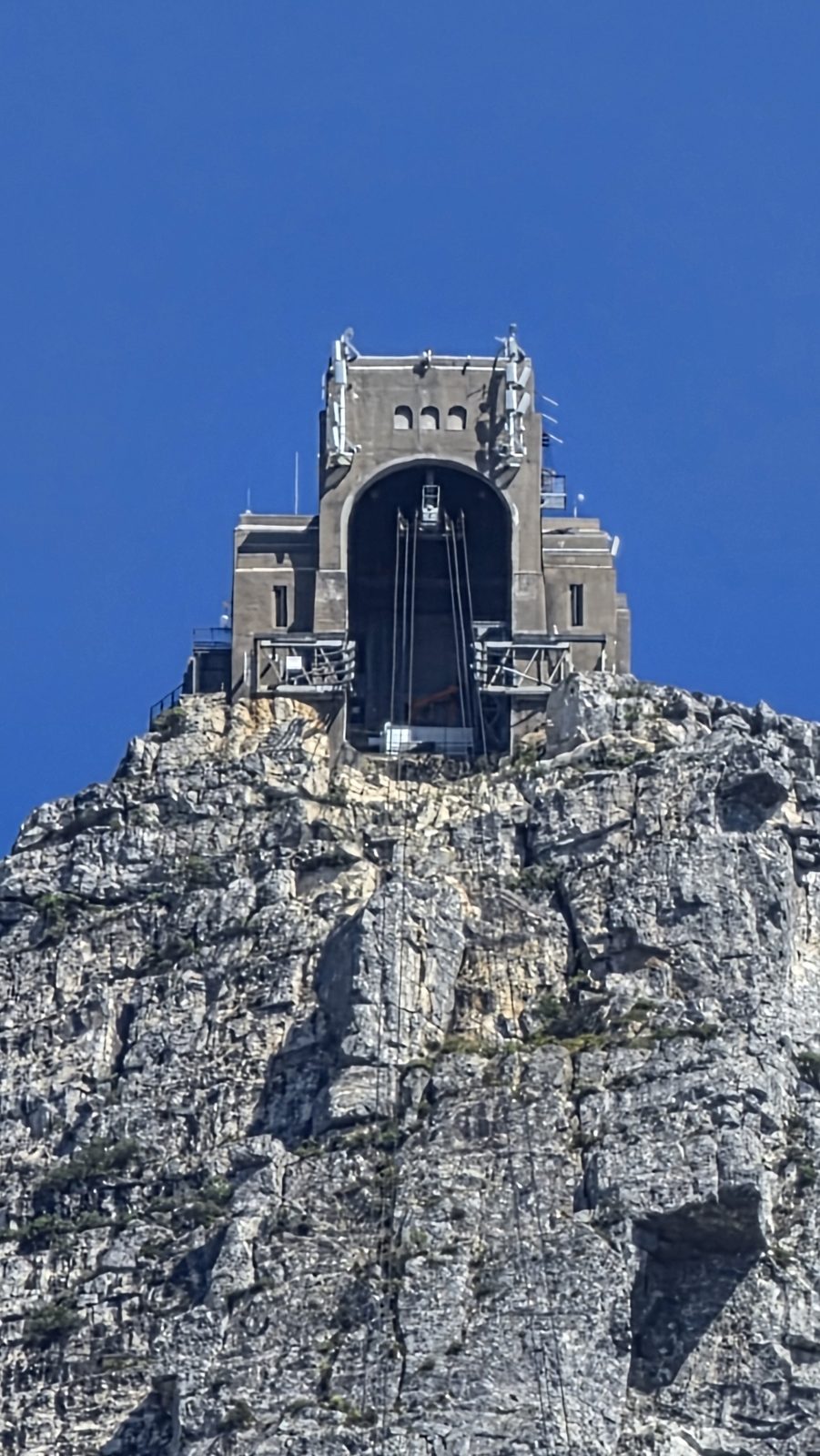
The upper station, perched on the cliff edge — the last stop before the summit plateau.
On the summit
The top of Table Mountain isn't a peak — it's a plateau roughly three kilometres wide, laced with walking paths, viewpoints and its own miniature ecosystem:
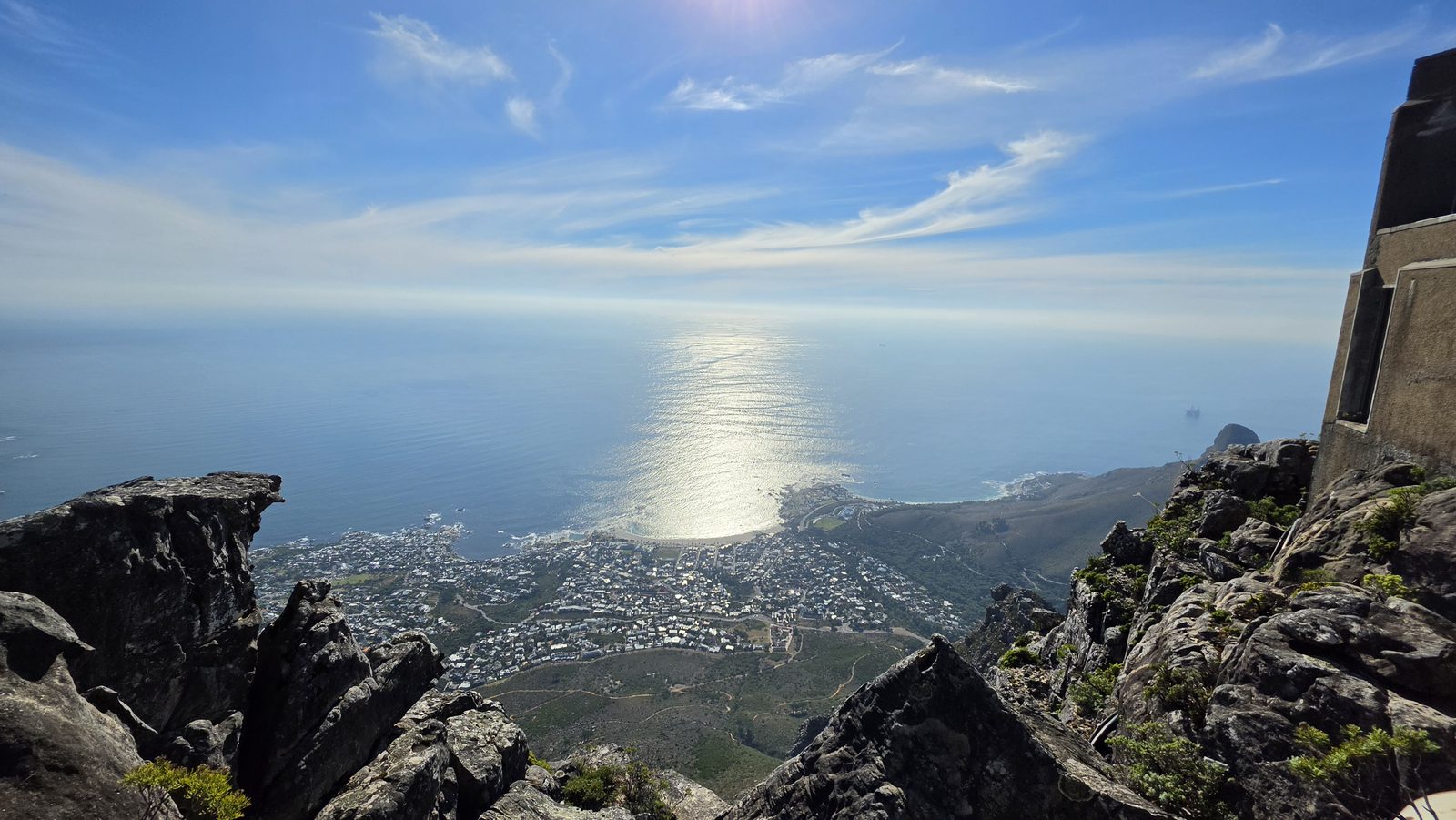
From the summit: the Apostles ridge running south and the Atlantic far below.
- The viewpoints — short paved loops from the upper station give you the city, the Apostles and the Atlantic in every direction.
- Dassies — the summit's resident rock hyraxes, sunbathing boulders-full of them. Improbably, their closest living relative is the elephant.
- Fynbos — the mountain is part of the Cape Floral Kingdom; over a thousand plant species live on the summit plateau alone, many found nowhere else on Earth.
- Maclear's Beacon — the true highest point (1,086 m), a 45-minute walk across the plateau for those who want the summit proper.
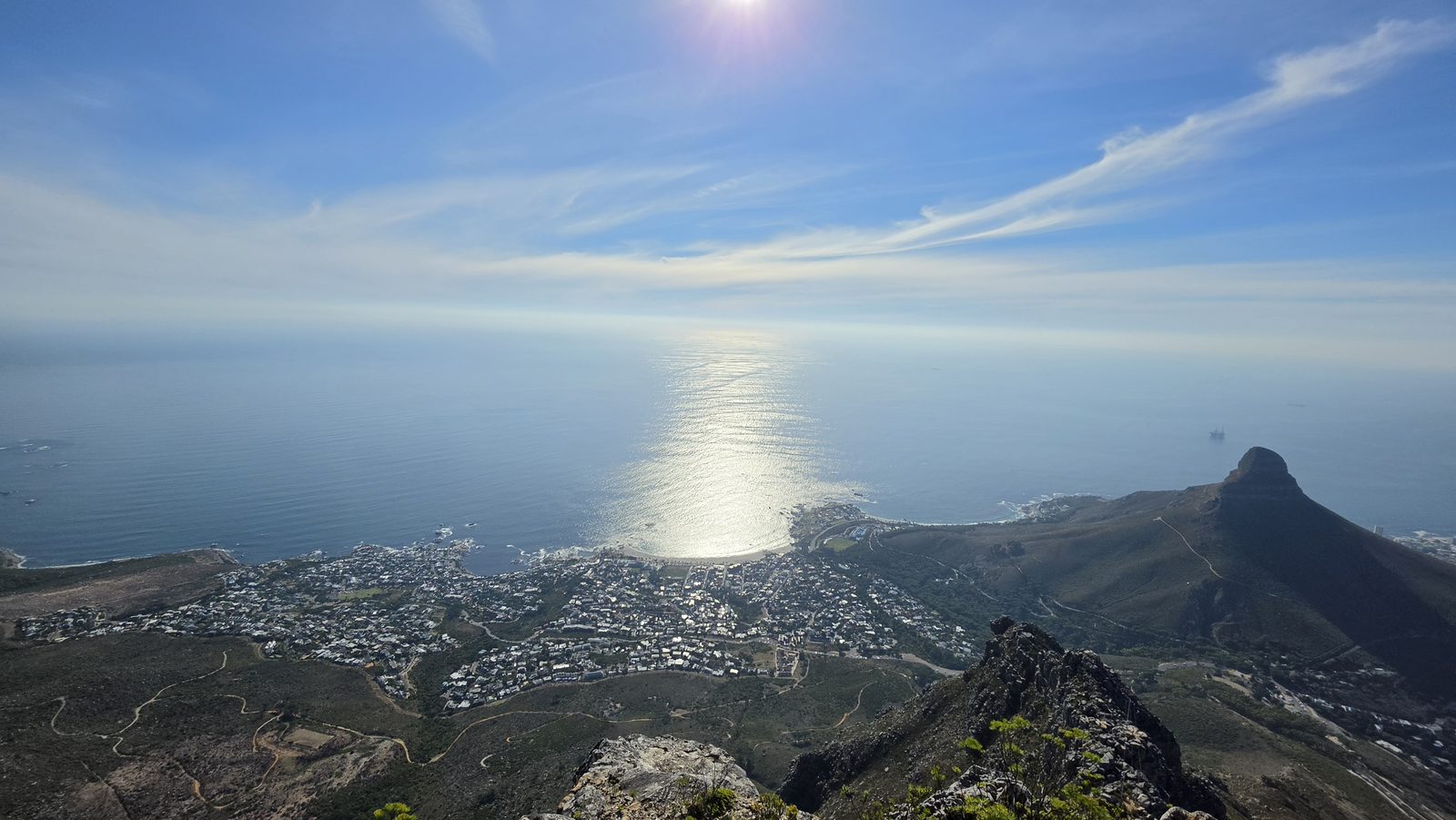
Late afternoon from the summit — the sun laying a silver road across the Atlantic.
The tablecloth (and the wind)
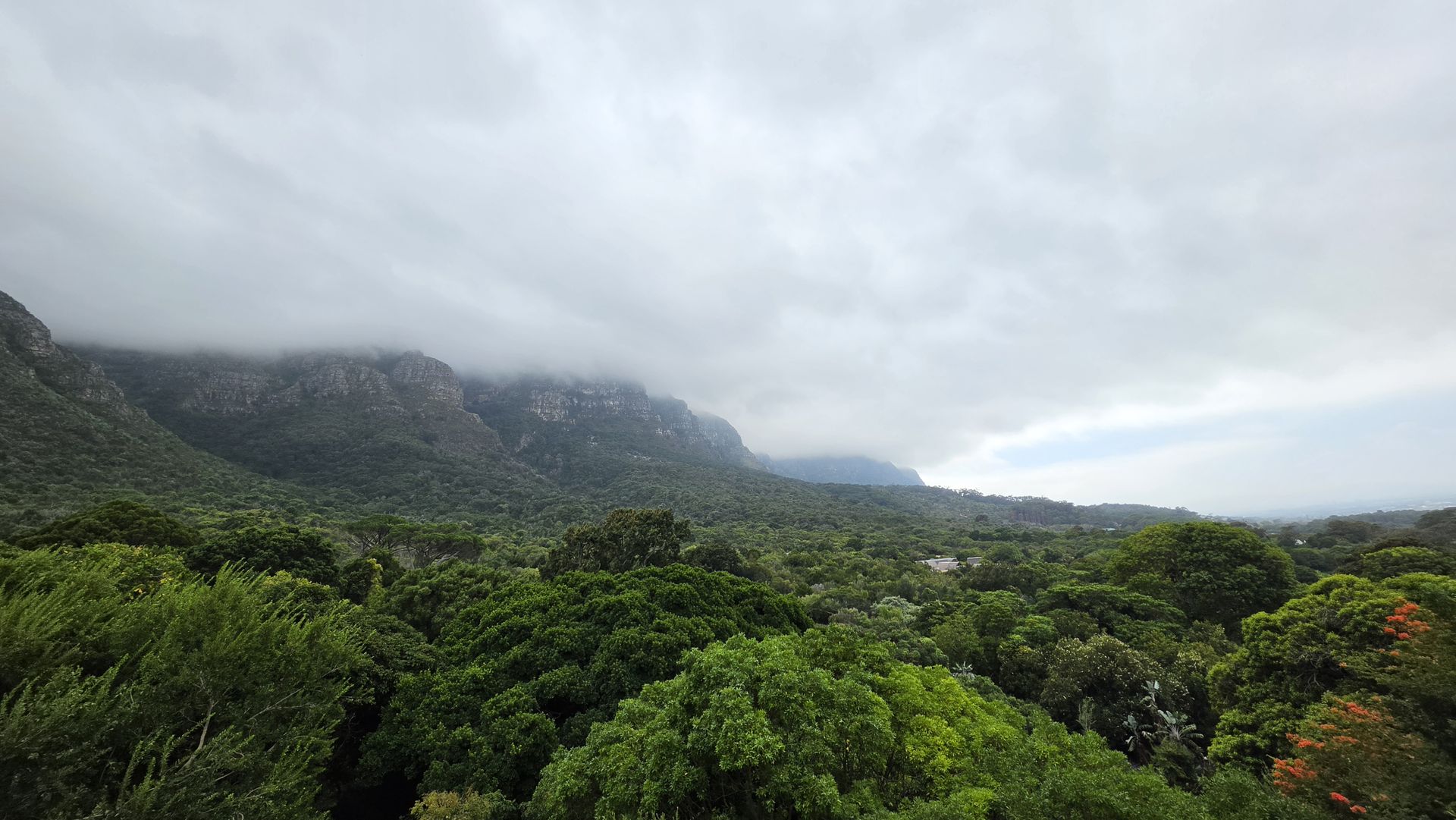
Table Mountain makes its own weather. When the south-easter blows in summer, moist air rides up the slopes and condenses into the famous "tablecloth" — a cloud that pours over the flat summit like spilling silk. It's mesmerising from below and freezing from above.
The practical side: the cableway closes in high wind, and the summit can be wrapped in cloud while the city sunbathes. This is the single most important thing to know about visiting — you go up when the mountain says you can, not when your itinerary does. Locals check the conditions and drop everything when the mountain is open and clear.
Insider tips from 23 years of guiding
- Book tickets online — and go early. The first cars of the morning mean no queues and the crispest light.
- Keep your plans flexible — if day one is windy, go on day two. Cheryl builds her city tours around exactly this, swapping the mountain in whenever the weather window opens.
- Winter is a secret weapon — between the fronts, winter days (like the one in these photos) are often windless and crystal clear, with the summer south-easter and its tablecloth gone.
- Late afternoon is magic — softer light, thinner crowds, and the sun sinking over the Atlantic. Sunset from the summit is unforgettable.
- Take a layer — the summit is reliably 5–10 degrees colder than the city, whatever the season.
- Feeling energetic? — Platteklip Gorge is the classic hiking route up (2–3 hours, steep, spectacular), and you can ride the cableway back down.
Visiting with Cheryl
Table Mountain slots into almost any Fusion day: a morning ascent before a city and Bo-Kaap tour, a flexible weather-window visit during a Peninsula itinerary, or a late-afternoon trip timed for that golden Atlantic light. Cheryl watches the mountain the way sailors watch the sea — she'll tell you which day is the day, get you to the lower station at the right hour, and have a plan B ready if the tablecloth rolls in.